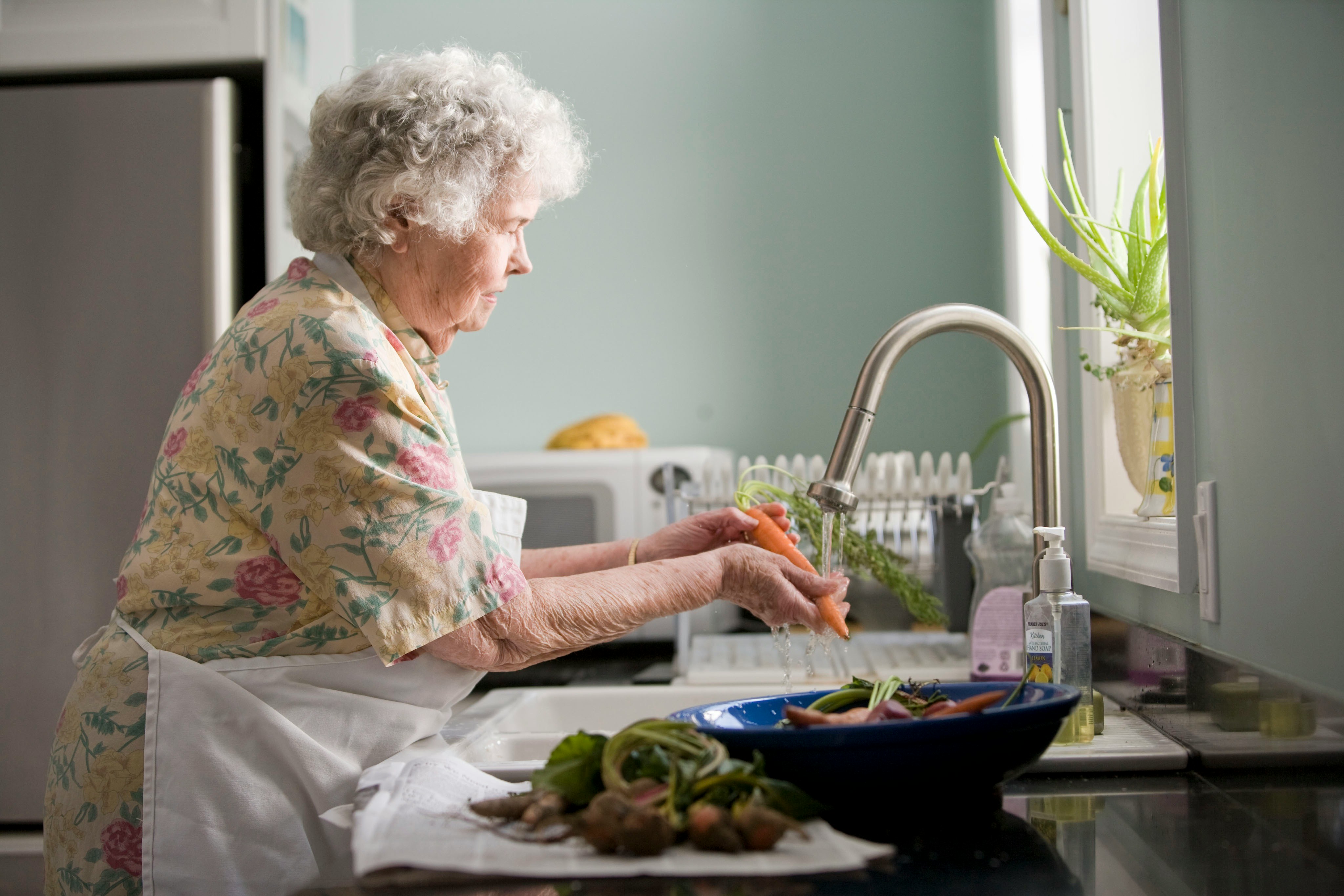
The different lifestyles, occupations and biology of men and women could mean that pesticides affect them in different ways. Margreet van der Burg, Chair of SPRINT's Gender Committee, shares evidence from SPRINT that highlights some of these differences, and offers recommendations to other projects to ensure that sex and gender considerations are embedded across the research.
Read the blog here: https://sprint-h2020.eu/index.php/blog/item/14-pesticides-are-the-risks-different-for-men-and-women
 |
Over the past 5.5 years, the SPRINT project has aimed to:
Now the project has drawn to a close, we are keen to hear if our work has influenced your work or your way of thinking. Complete our short survey to tell us how you have received and understood our work >> https://app.onlinesurveys.jisc.ac.uk/s/glos/sprint-evaluation-survey
|

You may have heard that some pesticides can disrupt the gut microbiome. In our latest blog, Maaike Gerritse shares findings from the SPRINT project that show how pesticides affect this delicate ecosystem, as well as the first ever evidence that pesticides can change the microbiome in your nose that protects you from disease.
Read the blog here: https://sprint-h2020.eu/index.php/blog/item/13-could-pesticides-affect-gut-health-microbiome-sprint
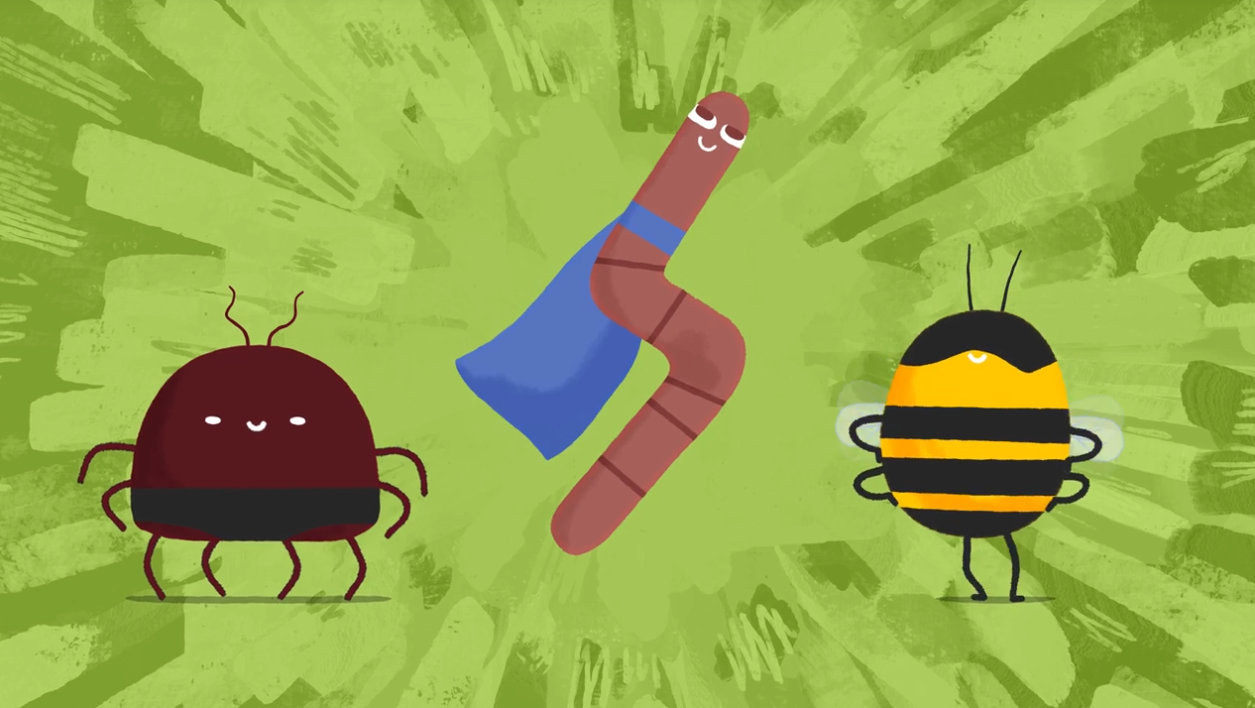
Earthworms, mites and bees might be small, but they are powerful helpers on farms and in gardens. Worms keep soil healthy, mites protect crops from pests, and bees help plants grow fruit and seeds.
Our new 2-minute animation for kids shows how pesticide mixtures harm these superhero bugs, and what we can all do to help protect these important mini-beasts.
Scientists working on the EU-funded SPRINT project wanted to understand what happens when these tiny heroes are exposed to mixtures of pesticides, which are combinations of chemicals often found in real farm soils.
But as you will see in the video, although single pesticides can appear safe when tested alone, our research shows that mixtures can cause greater harm.
Watch the animation now!
This work was commissioned by the Countryside & Community Research Institute, University of Gloucestershire, on behalf of SPRINT, and created by Rumpus Animations together with animation students from the University of Gloucestershire.
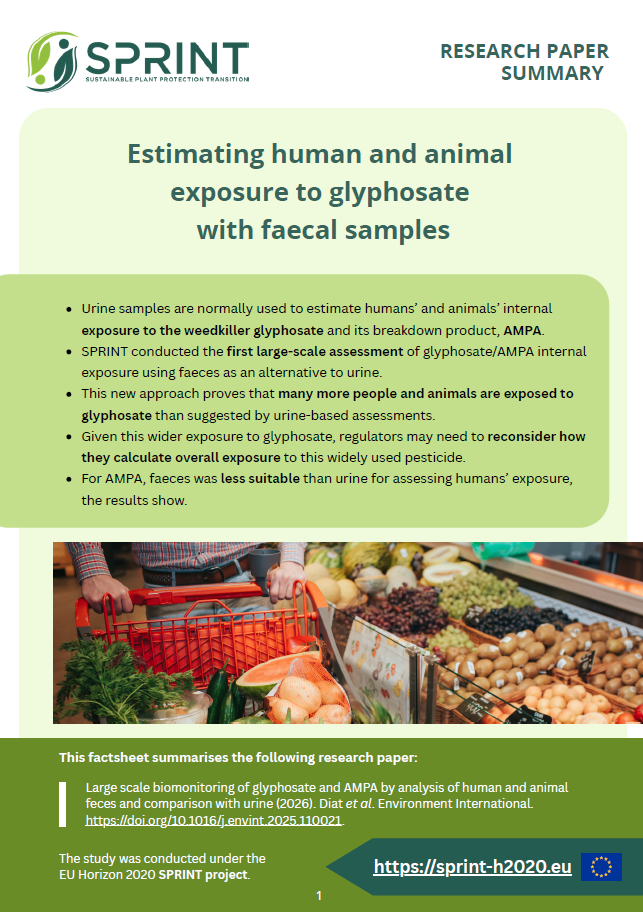
Recent research from SPRINT proves that many more people and animals are exposed to glyphosate than suggested by standard urine-based assessments.
You can now read an accessible, quick-to-read summary of this study in a new factsheet.
The factsheet is based on the peer-reviewed paper Large scale biomonitoring of glyphosate and AMPA by analysis of human and animal feces and comparison with urine by Diat et al. which was recently published in the journal Environment International.
The study conducted the first large-scale assessment of glyphosate/AMPA internal exposure using faeces as an alternative to urine.
Given that glyphosate exposure is much wider exposure than previously assumed, regulators may need to reconsider how they calculate overall exposure to this widely used pesticide.