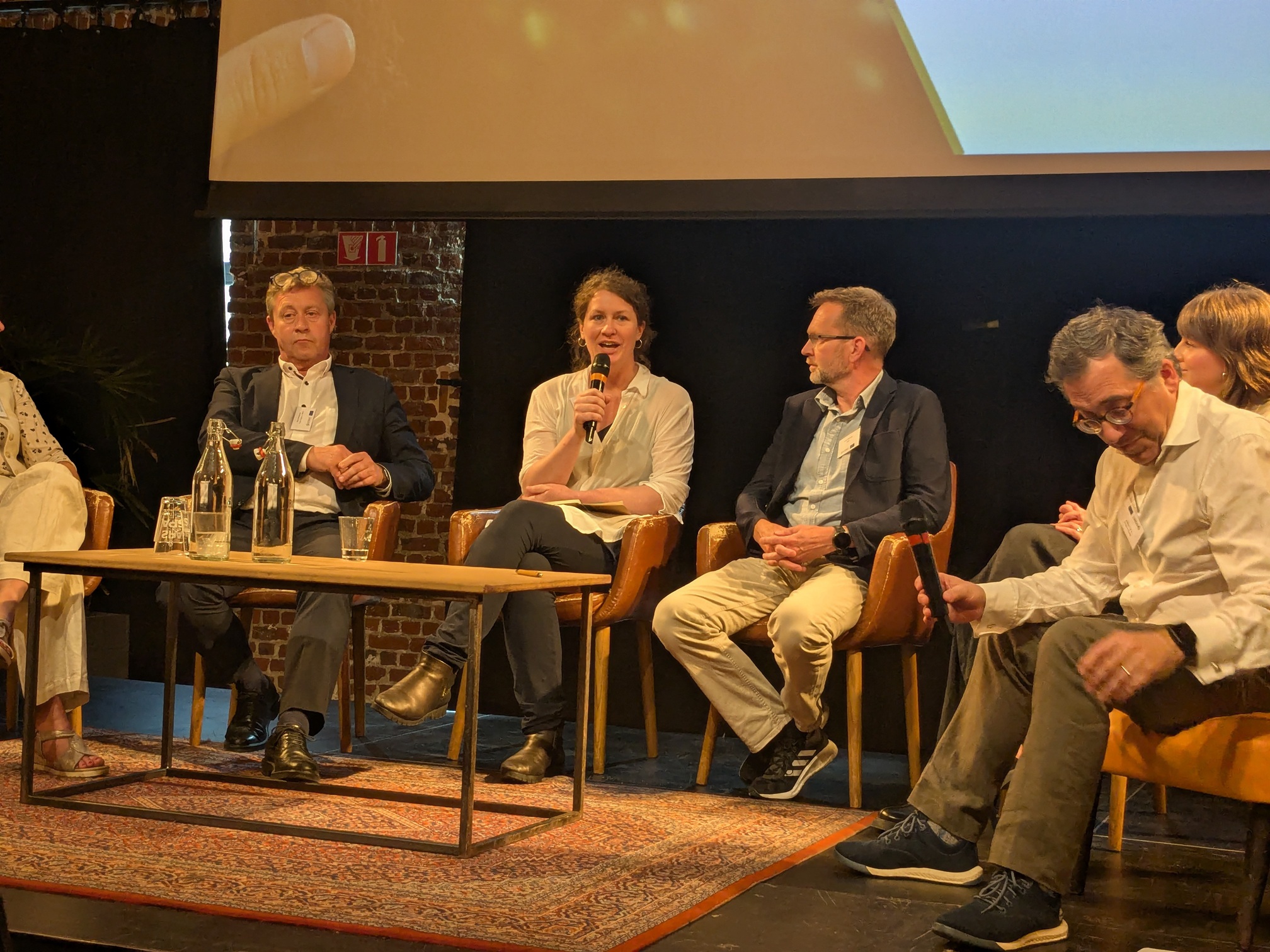
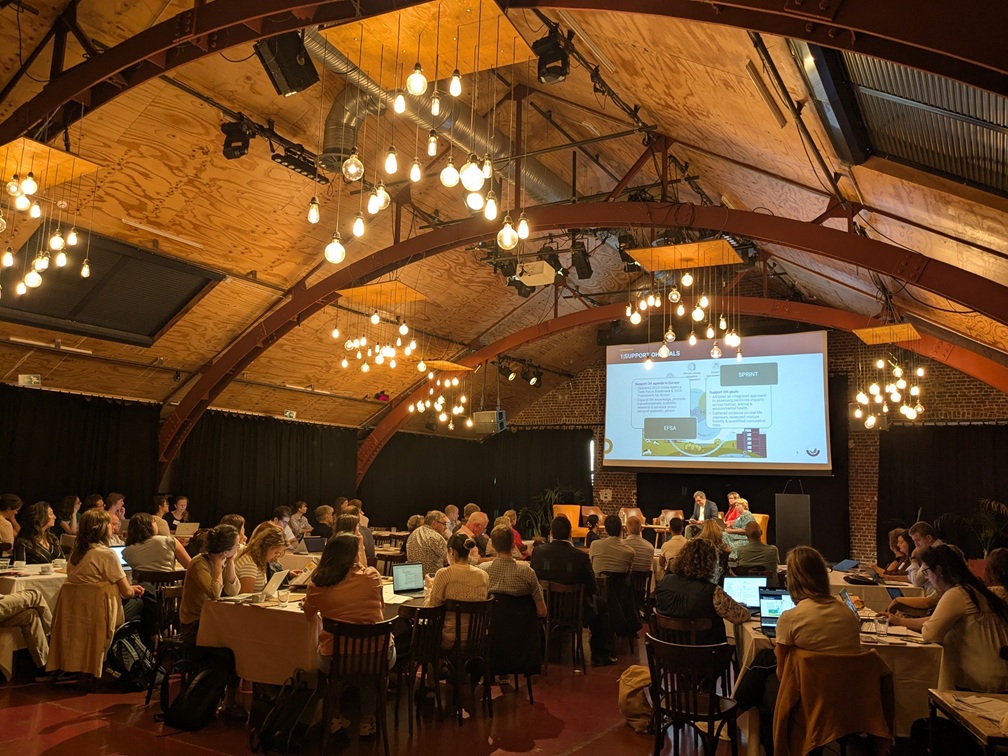
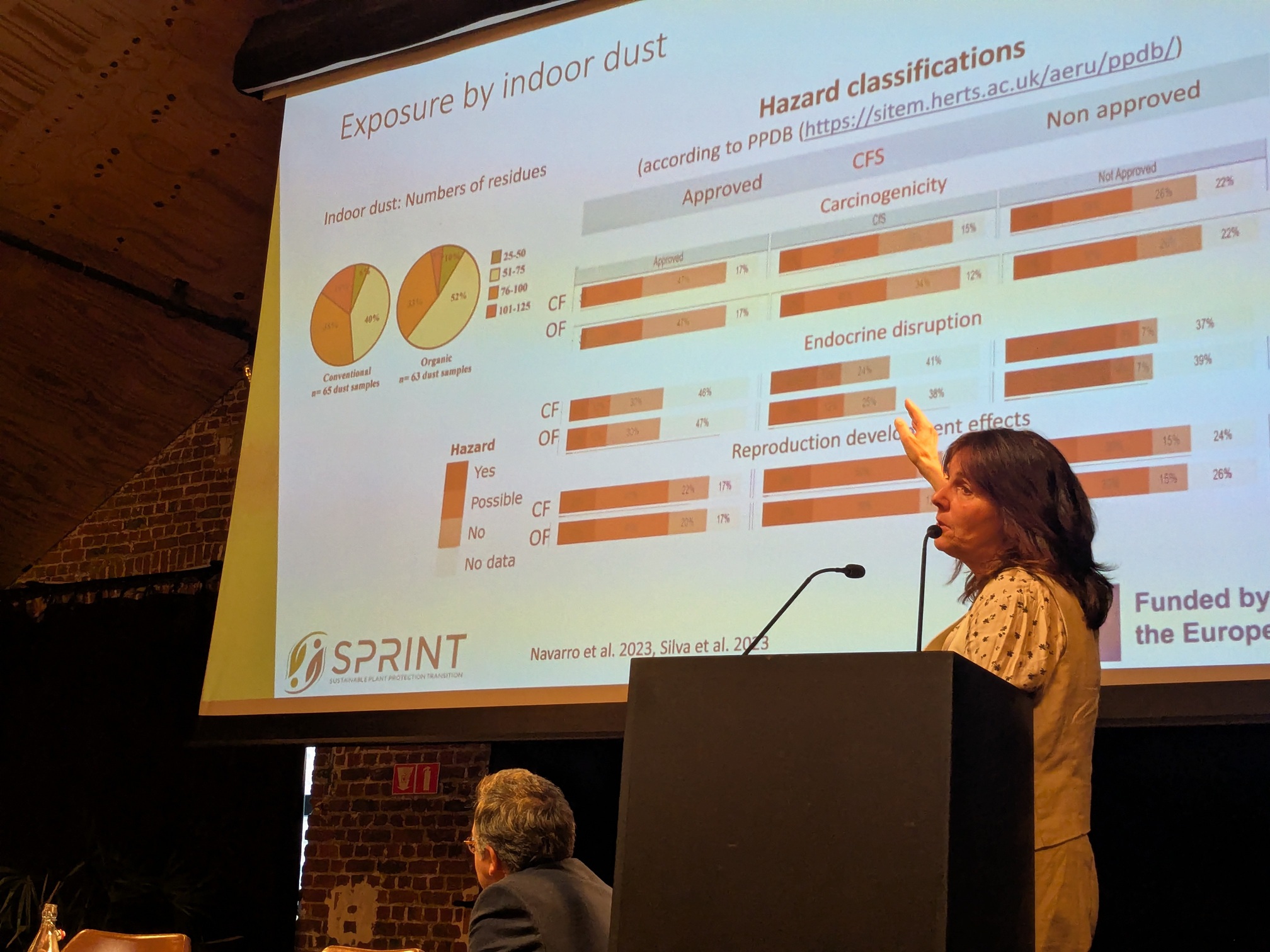
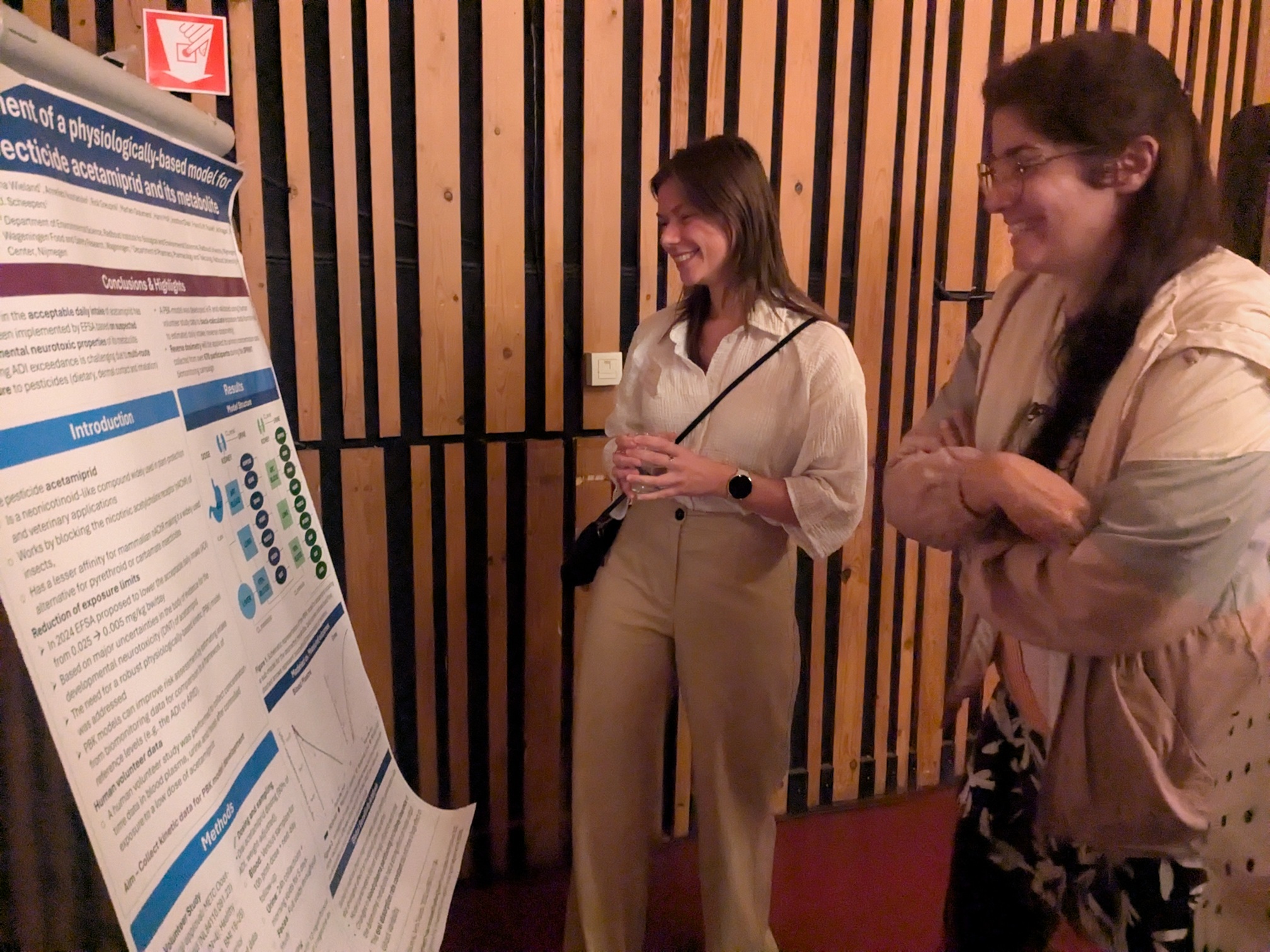
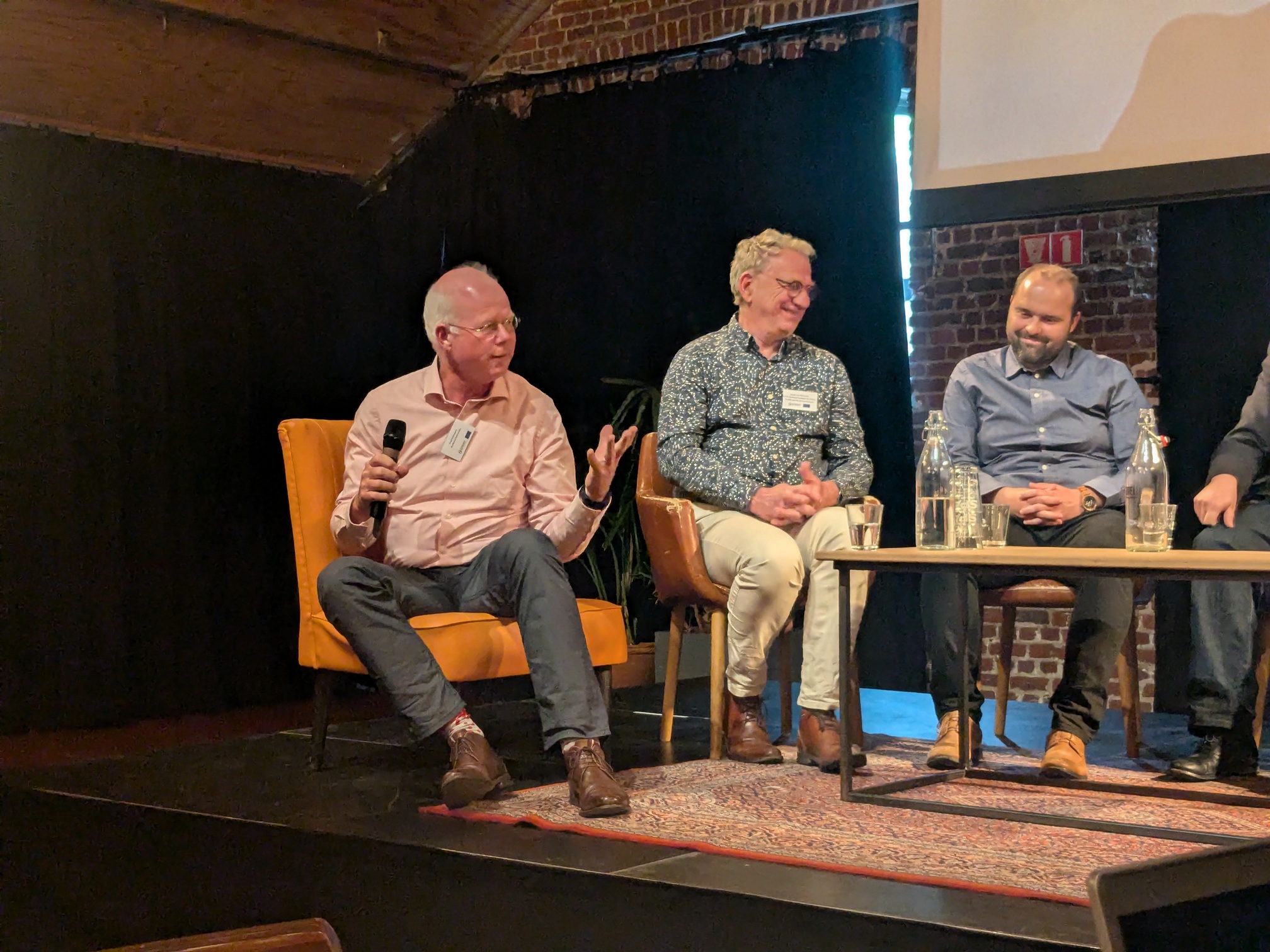
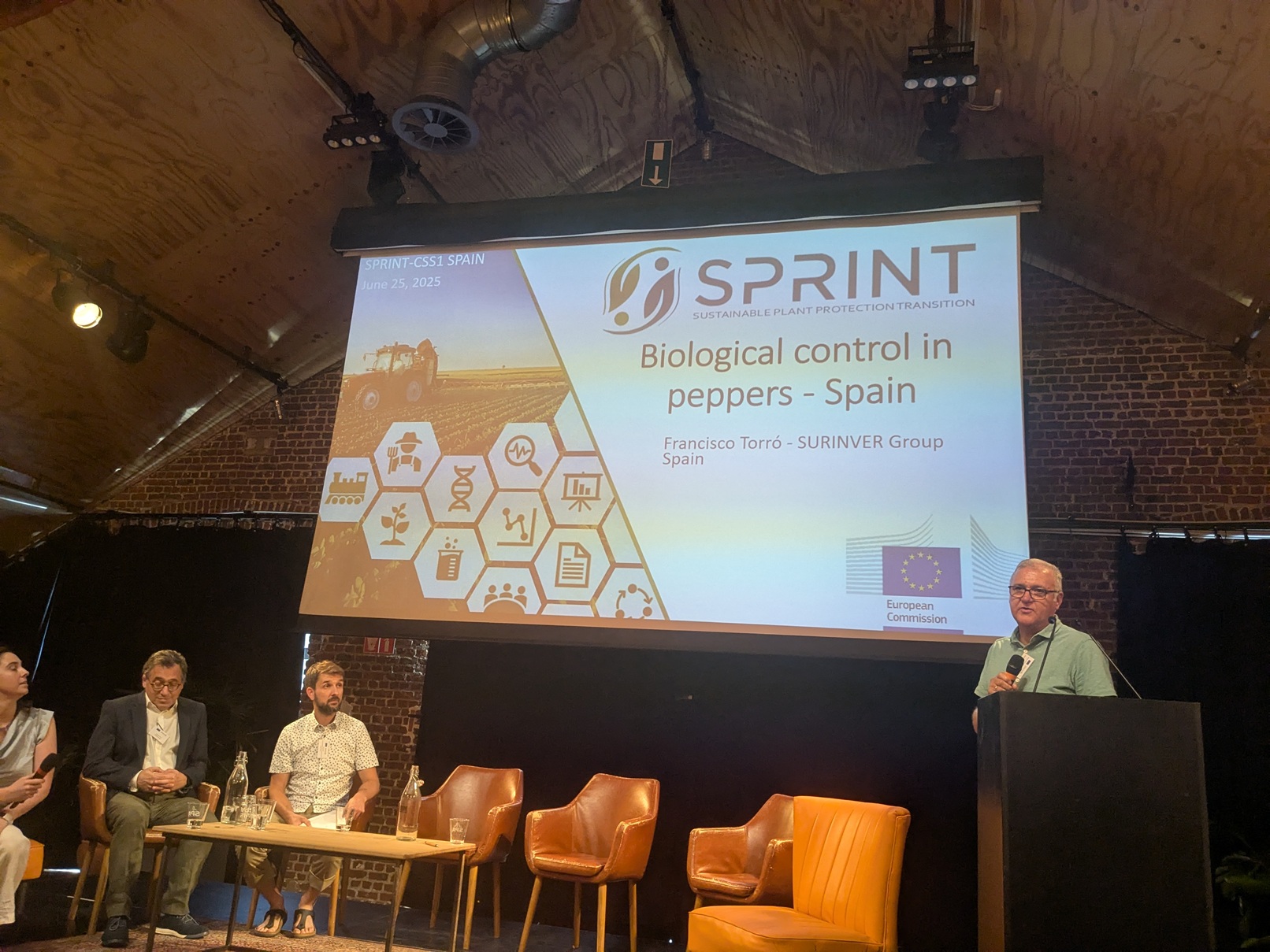
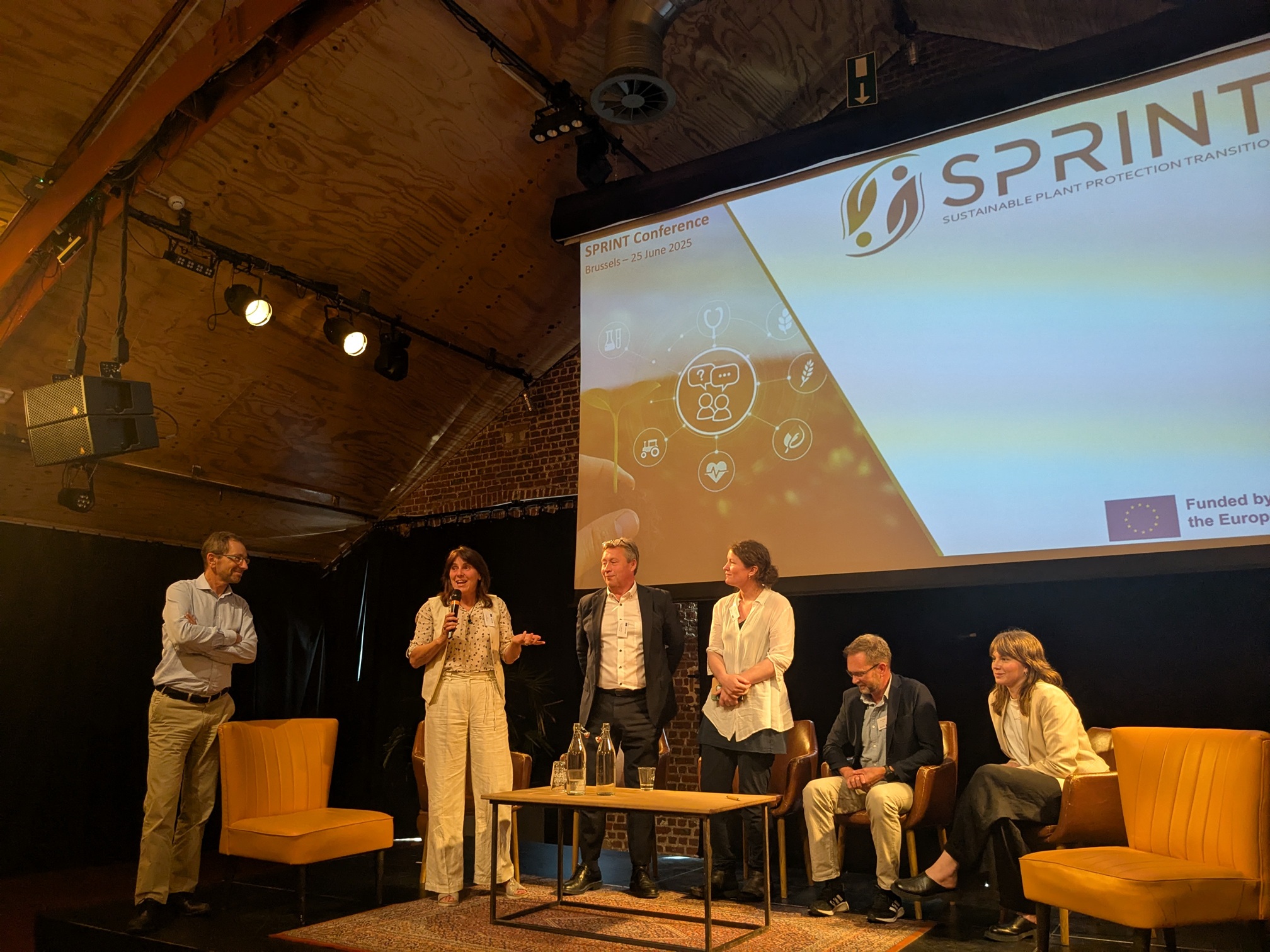
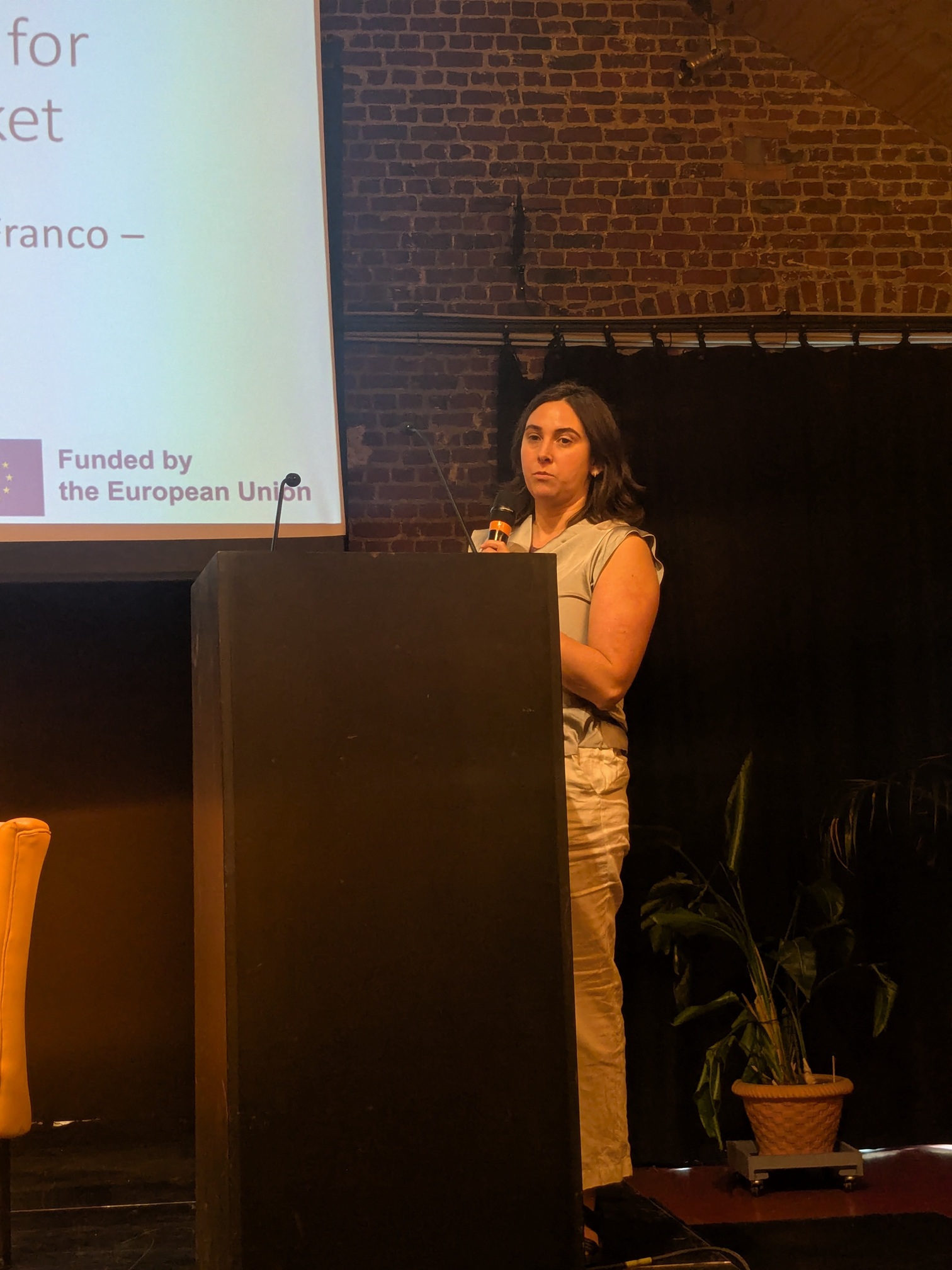
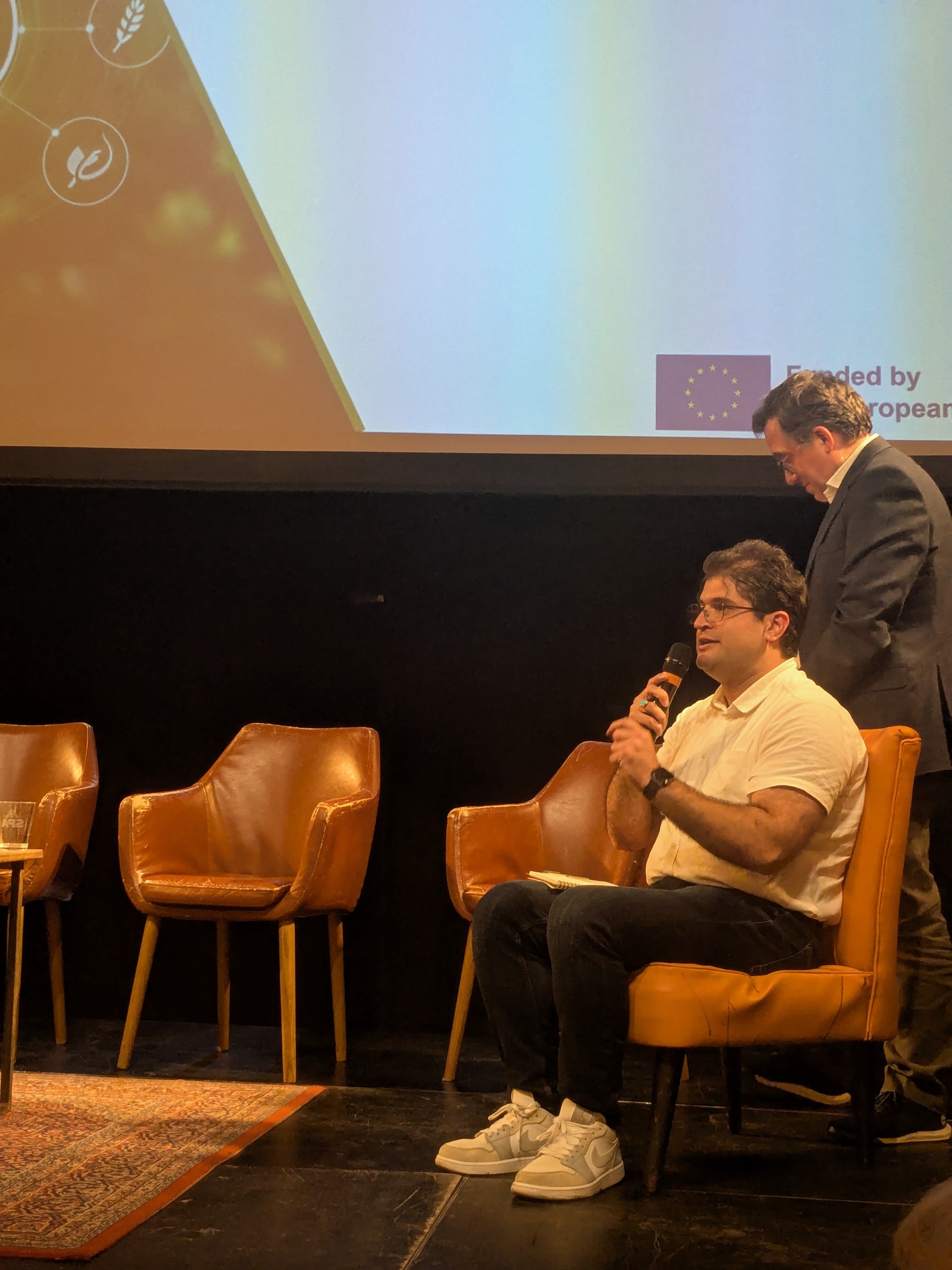
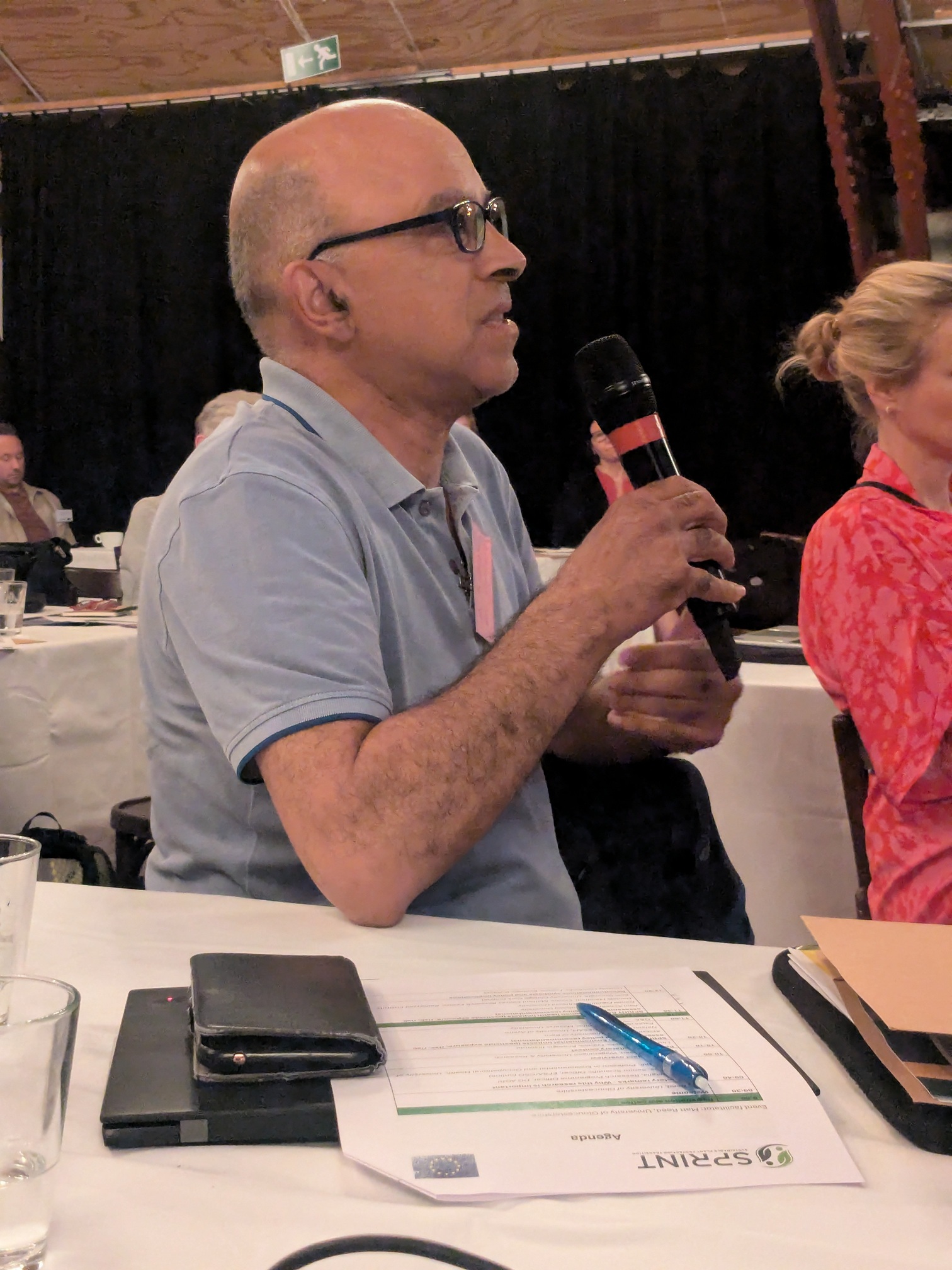
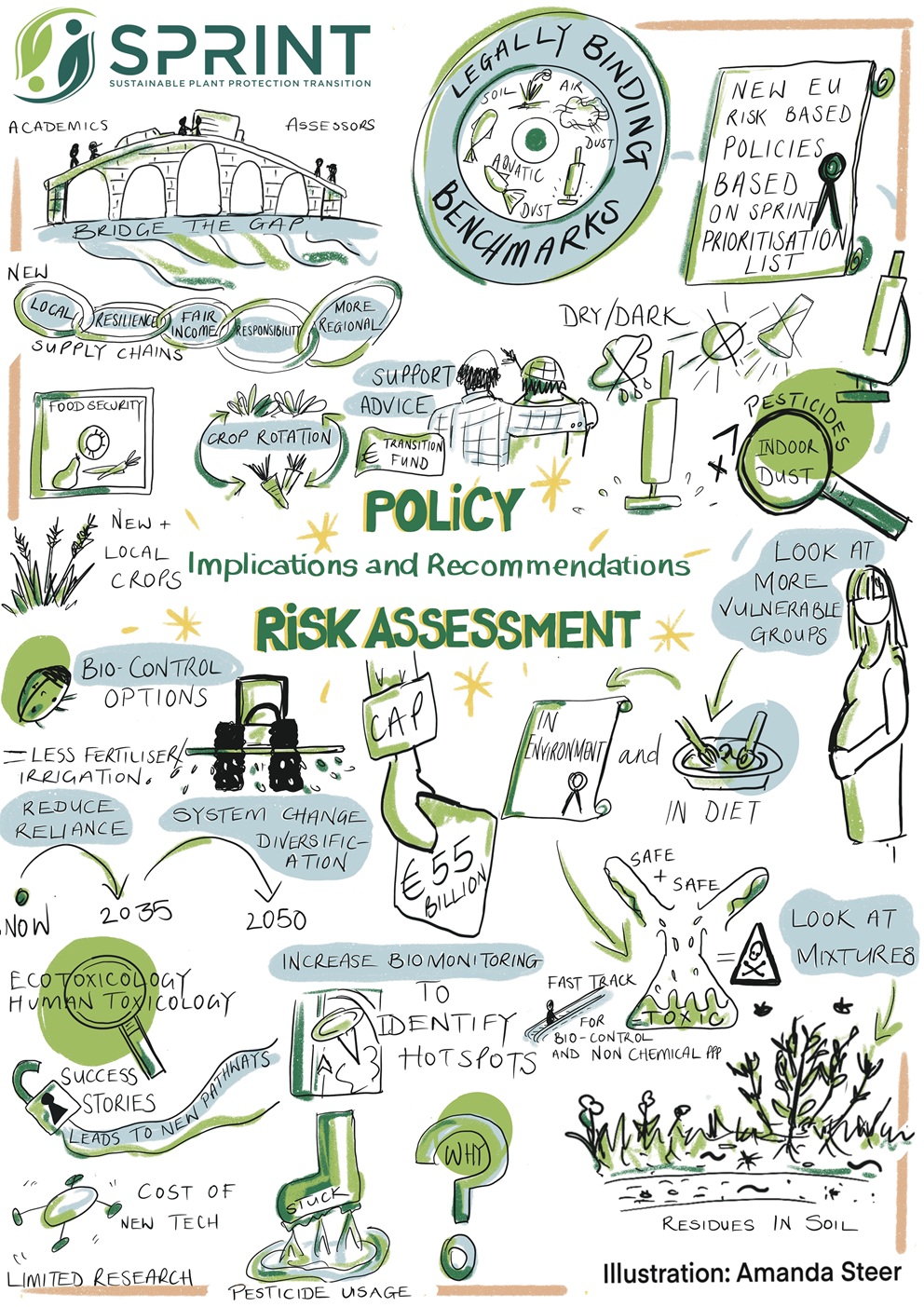
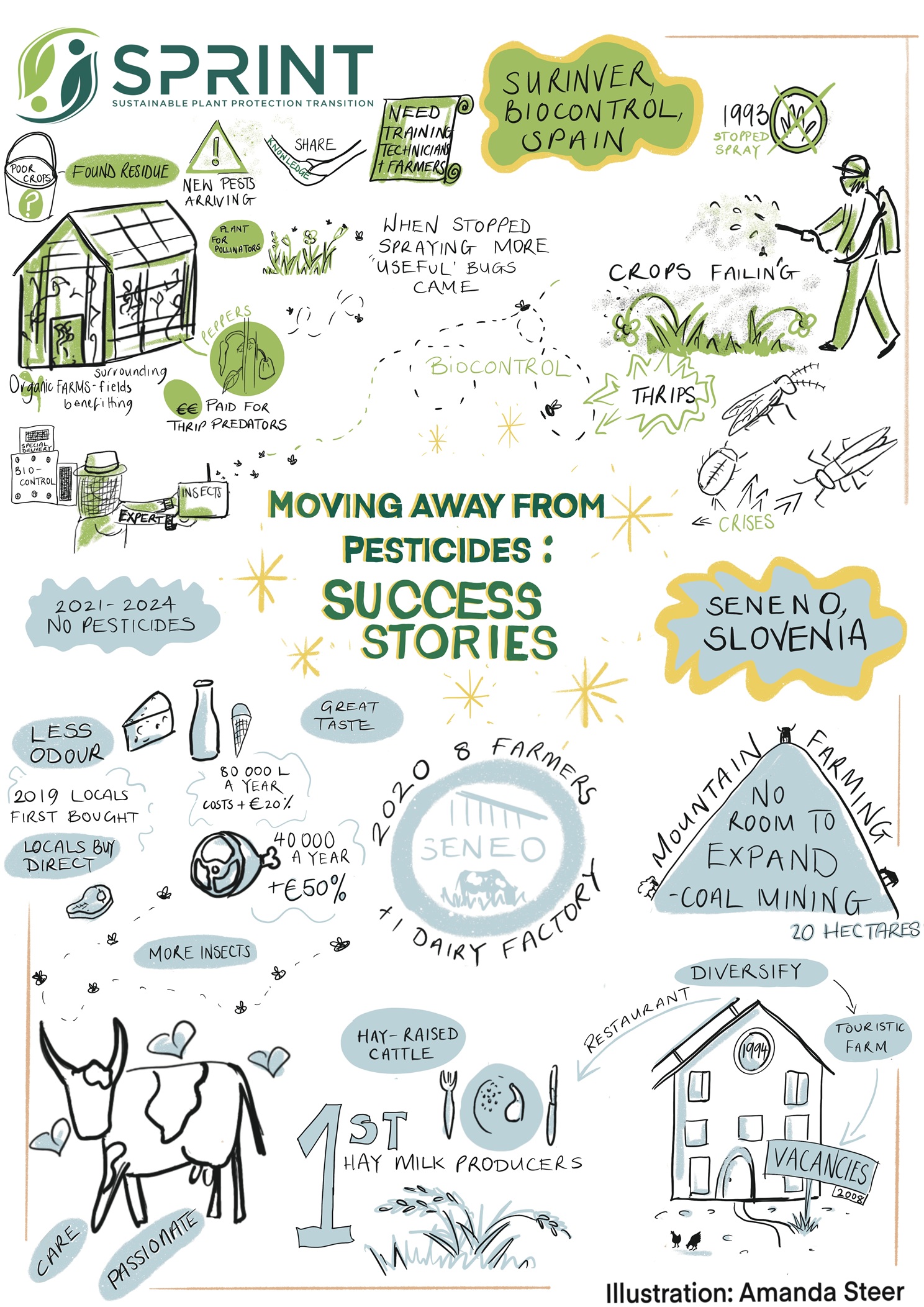
Shaping the Future of Sustainable Plant Protection, SPRINT's conference, took place on 25th June 2025 in Brussels.
Register Button
This one-off conference gave delegates the chance to discover how they can drive real progress in:
more realistic risk assessments of pesticides - for advanced health and environmental protection
the transition towards sustainable plant protection
In the largest study of its kind, SPRINT spent 5 years producing extensive new evidence on pesticides’ health and environmental effects and their fate, and viable routes to more sustainable systems of plant protection.
As it drew to a close, the EU Horizon 2020-funded project shared its key findings and approaches at this event.
Pesticide cost-benefit analysis | Claudia Meier, Research Institute of Organic Agriculture (FiBL), Farshad Soheilifard, Technical University of Denmark & Adrian Müller, Research Institute of Organic Agriculture (FiBL)
The SPRINT consortium recently collaborated with the Food and Agriculture Organisation of the United Nations (FAO) to organise a joint webinar to raise awareness about an ongoing EU-funded project, SPRINT. The event was organised and moderated by our partners from the Countryside and Community Research Institute, University of Gloucestershire (UK).
120 participants joined from all over the world, with attendees from every continent besides Antarctica. Attendees came from a range of backgrounds, including international organisations, governmental bodies, non-governmental organisations, academia, and the private sector. The event was a great success, with lively discussion throughout.
The event began with an overview of the SPRINT project, presented by Wageningen University and Research. SPRINT is making an internationally valid contribution to research through assessing the integrated risks and impacts of pesticide use on environmental and human health, with research being carried out across 11 case study sites across Europe and in Argentina. SPRINT will also develop innovative transition pathways to help policymakers understand how to achieve more sustainable use of pesticides. You can watch a 2-minute explainer video on the SPRINT project here.
Next, Beatrice Grenier of the FAO gave an overview of how SPRINT is relevant to their activities and how they are contributing to the project. The aims of SPRINT align closely with several of the UN’s Sustainable Development Goals through contributing to achieving sustainable agriculture. The FAO will contribute to SPRINT by testing the global workability of the toolbox whilst working on policy guidance on ways of reducing the risks of pesticide use.
Rex Horgan, of the EU’s health and safety Directorate-General (DG SANTE) then provided an overview of how this research fits within EU policy. He explained that SPRINT is closely linked with the EU’s ‘Farm to Fork’ strategy, with the project playing a role in finding a path towards sustainable food production through the use of a multi-actor approach.
We also heard about several aspects of the SPRINT project, including how the project is investigating the impacts of pesticides on human and environmental health, the structure of the SPRINT global health risk assessment toolbox, and how we will seek transition pathways towards reduced use and risk.
Interested in learning more about the future of pesticide use? Sign up to the SPRINT newsletter via our website.
If you would like to download the slides for each presentation, you can do so below:
We held two question and answer sessions during the webinar, which led to some in-depth discussions surrounding the SPRINT project alongside the future of pesticide use itself. Here, we provide a few examples of the questions posed during the webinar:
Q: Will you be exploring the fate of metabolites in the environment?
We are analyzing 200 pesticide residues in the field samples. This list includes active substances and metabolites. You can see the reasoning behind our analysis here: https://doi.org/10.1371/journal.pone.0259748.
Q: How is the EU Commission helping developing countries to transition away from pesticide use?
The EU Chemicals Strategy mentions some specific points on this. The EU will:
Promote the sound management of chemicals through international cooperation and partnerships, in bilateral, regional and multilateral fora, including through cooperation with Africa, as well as cooperation with neighbours and other partners to support their capacity to assess and manage chemicals in a sound manner;
Lead by example, and, in line with international commitments, ensure that hazardous chemicals banned in the European Union are not produced for export, including by amending relevant legislation if and as needed;
Q: Are there specific gender-based constraints in access to knowledge on pesticides?
FAO is currently working on a publication called "Addressing gender issues in pesticide management", whilst SPRINT is considering gender at multiple levels. for instance, in the SPRINT field campaigns, we have collected samples from male and female participants. participants = farmers, neighbours, and consumers.
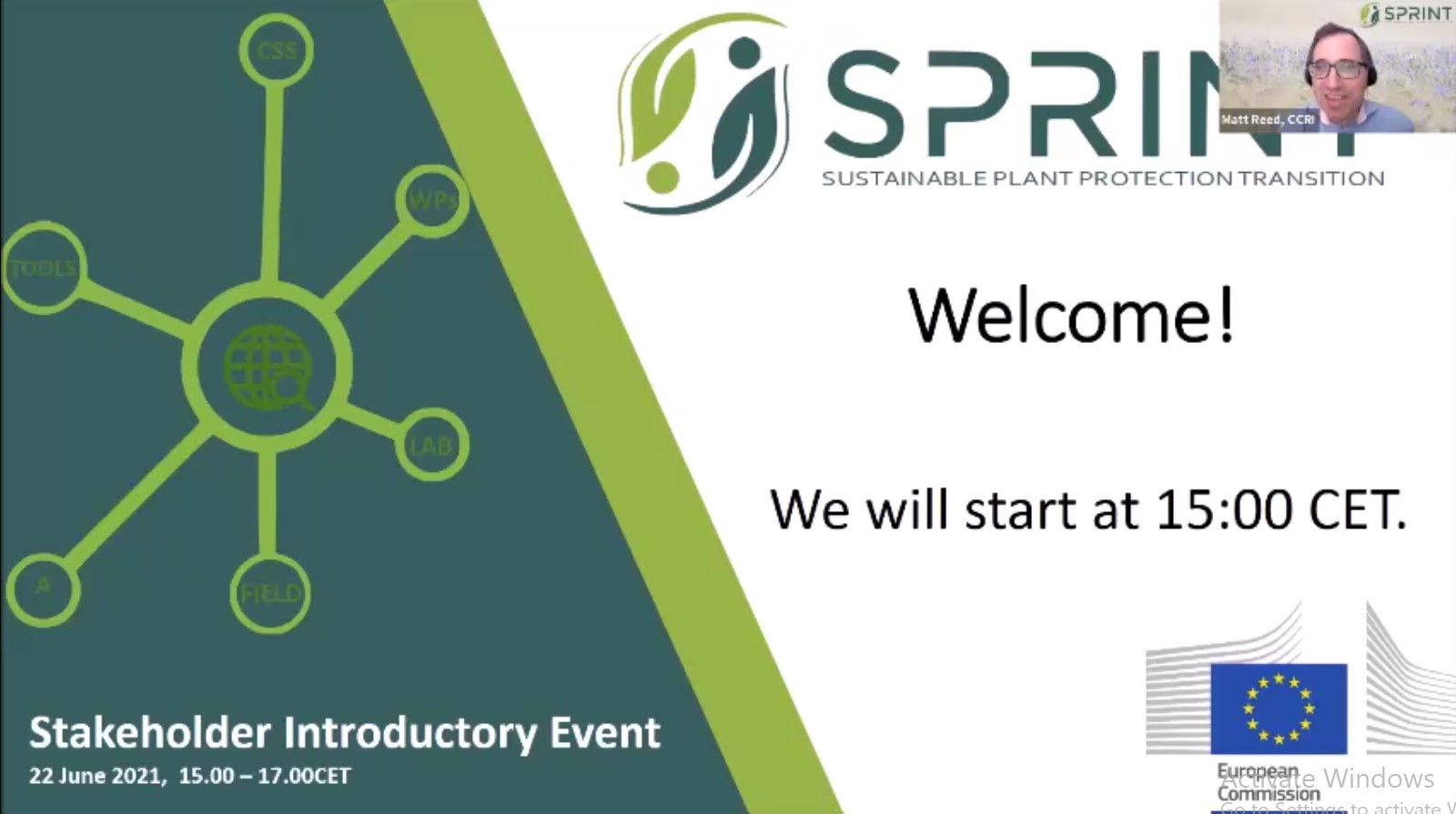
The SPRINT Stakeholder Introductory took place on Tuesday 22nd June, 2021. With 117 participants and a lively discussion in breakout groups, the meeting was a great way to kick-off our exchanges with stakeholders.
As a follow-up to the meeting, a recording is available here. A summary report from the discussion groups is available here.
Over the coming years, we will continue organising exchanges with stakeholders on specific aspects of risk assessment, toolbox development and transition pathways twice per year. We will also be conducting interviews for the economics and transition pathways work. If you are a stakeholder in one of our case studies, the local team will be in touch with you directly.
If you would like to keep updated on our progress and engage with us actively, you can still become a SPRINT stakeholder by registering here: http://eepurl.com/hwZtUD. If one of your colleagues would be interested in the project, please feel free to forward this email and the link as well.
Funding
SPRINT Project is funded by
the European Union’s Horizon 2020 Programme for research & innovation under grant agreement no 862568